
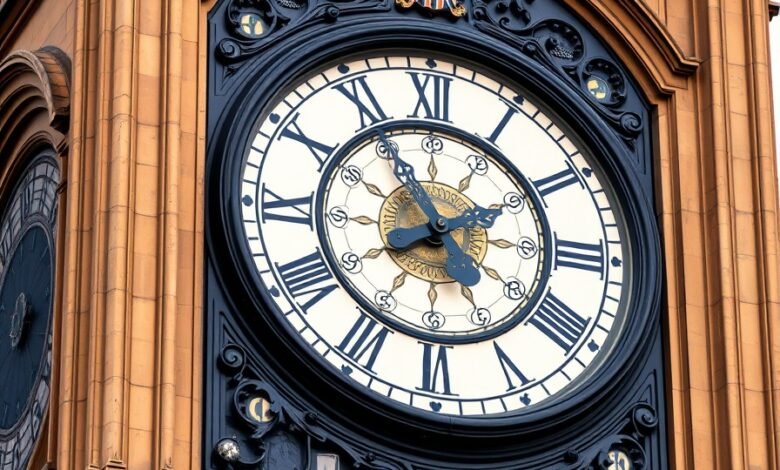
As autumn took hold and the nights began to lengthen, the time finally arrived to officially bid farewell to British Summer Time.
At 2:00 AM this morning, the UK turned its clocks back by one hour, ushering in a five-month period of Greenwich Mean Time.
While you may have enjoyed an extra hour in bed, many countries around the world abandoned this annual time shift long ago.
Now, experts have joined the growing call for the UK to follow suit.
There was a time when Daylight Saving Time was common globally, but the UK is now clearly in the minority.
Roughly half of the countries that once adjusted their clocks have since discontinued the practice.
In the last decade alone, Azerbaijan, Iran, Jordan, Namibia, Russia, Samoa, Syria, Turkey, Uruguay, and large parts of Mexico have abandoned this tradition.
Today, only one-third of the world’s nations employ this system, while the remaining 139 states maintain the same time throughout the year.
The UK first introduced this system in 1916, at the height of the First World War, aiming to capitalize on the long summer evenings and thereby save fuel used for lighting.
Between 1968 and 1971, there was a brief attempt to abolish the practice, during which the country experimented with keeping British Summer Time in effect all year round.
However, this experiment had to be abandoned following complaints regarding cold, dark winter mornings particularly in northern Scotland. And so, Britain remains one of the few countries that still adjust their clocks back and forth each year.
TikTok was flooded with memes from British users; some were surprised to find the clock reset to 1:00 AM while they were working the night shift, while others unaware that they had gained an extra hour of sleep woke up feeling remarkably refreshed.
TikToker Maria Murdoch, struggling with the disruption to her biological clock caused by this extra hour, recorded a video from her bed and said: “Shout-out to everyone who is wide awake right now turns out, an extra hour of sleep just doesn’t sit well with our body clocks.”
Another account, ‘Cozy Crew Club’ which focuses on parenting posted a video with the caption: “Clocks are going back tonight, which means an extra hour in bed. Unless you have kids in which case, congratulations: 5:00 AM is the new 6:00 AM!”
However, some people took a more positive view of this extra sleep.
TikToker ‘Maliha.px’ told her followers: “I absolutely hate that British Summer Time is over, but honestly, I had the best sleep last night.”
“Look at my eyes I’ve still got sleep creases on my hands! That extra hour really came in handy.”
This practice remains common across much of Europe, where most countries still adjust their clocks every spring and autumn.
Yet, even within this region a traditional stronghold for daylight saving countries like Armenia, Azerbaijan, Belarus, Georgia, Iceland, Russia, and Turkey have all abandoned the practice. Egypt holds a unique distinction in this regard: it is the only country in Africa that observes Daylight Saving Time (DST), and it is also the only nation on the continent to have both abolished and subsequently reinstated it over the past 20 years.
This North African state discontinued DST in 2015, but reintroduced it in 2023 as part of a government initiative to conserve energy.
Another notable case in North Africa is Morocco, which maintained permanent DST setting its time zone to GMT+1 from 2018 until September of this year, when the law was finally repealed following years of public protest.
Outside of Europe, DST is primarily observed in North America and Australia; however, a peculiar characteristic in these regions is that the practice is not applied uniformly across their entire territories.
In Australia, DST is observed everywhere except in Queensland, the Northern Territory, Western Australia, Christmas Island, and the Cocos (Keeling) Islands.
Chile adjusts its clocks in accordance with the seasons, with the exception of the Aysén and Magallanes regions, located in the sparsely populated south.
Similarly, while Mexico abolished DST in 2022, it made an exception for Baja California and several municipalities near the U.S. border, allowing them to continue adjusting their clocks to remain synchronized with their American neighbors.
The United States presents perhaps the most unusual arrangement, observing DST everywhere except in Hawaii and parts of Arizona.
Arizona was granted an exemption from DST regulations due to the extreme heat experienced in the Sonoran Desert. During an experiment with Daylight Saving Time (DST) in 1967, people had to endure the heat for longer periods and keep their air conditioning running for more time, which led to an increase in electricity bills.
An exception to this is the part of the state that falls within the Navajo Nation; it observes DST to remain synchronized with tribal lands located in the neighboring states of New Mexico and Utah.
As a significant portion of the world moves away from DST for practical reasons, experts are now calling for the United Kingdom along with the few other remaining countries to do the same.
Professor Jagdish Khubchandani of New Mexico State University told the Daily Mail that he is “generally of the opinion that DST should be abolished.”
This is because a growing body of research suggests that shifting the clocks can have serious consequences for physical health, mental well-being, and safety.
Moving the clock back by an hour might not seem like a major change, but many of the body’s systems are intricately linked to daily sleep schedules; any disruption can trigger a state akin to “mini jet lag.”
Professor Khubchandani notes: “Regarding physical health, various reports point to an increase in heart attacks and strokes…”…indicate a sudden increase. Furthermore, its effects include temporary fluctuations in blood pressure, irregularities in heart rate, and disruptions in the production of stress hormones.
‘Regarding mental health, individuals may experience symptoms of depression or shifts in their overall mood.
‘In our latest research, we also found that individuals already suffering from mental health conditions are at a higher risk of experiencing changes in their mental state following the clock change.’
Similarly, research conducted in Sweden has shown that this transition is linked to a 10 percent increase in the use of psychiatric medication.
For comparison, this increase in medication use is comparable to the levels observed by scientists in the United States following severe injuries or car accidents.
Scientists have also discovered that the rate of dangerous and potentially fatal errors rises following this transition.
Some studies have suggested that the risk of fatal traffic accidents increases by approximately six percent following the transition to Daylight Saving Time (DST) in the spring.