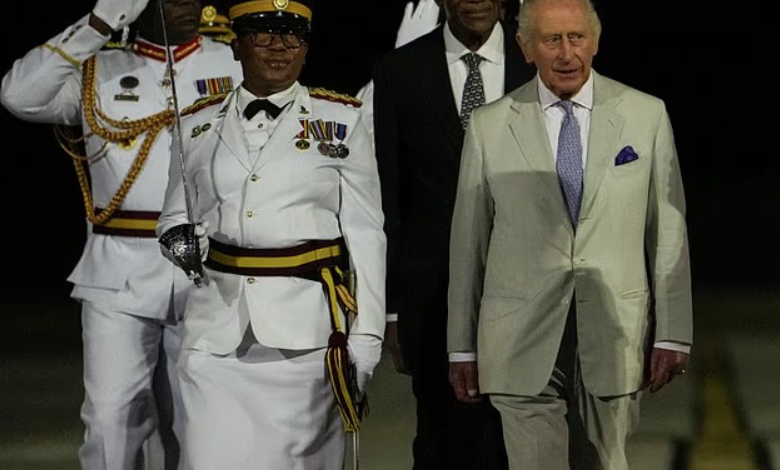
King Charles’s visit to the Caribbean has been cast into significant uncertainty following Andy Burnham’s announcement that he is “prepared” to offer an apology for Britain’s role in the slave trade.
Immediately following this statement, leaders from the West Indies demanded billions of pounds in reparations from London, prompting questions regarding the British government’s official stance.
Until Thursday evening, journalists accompanying the King had been assured that the government’s policy remained “absolutely no apology.”
Meanwhile, this development has led Tory leader Kemi Badenoch to question whether the UK should boycott Commonwealth summits if they are to become “an exercise in demanding money from Britain.”
Mr. Burnham’s remarks have fueled speculation as to whether the King in his capacity as Head of the Commonwealth might be required to express formal contrition on behalf of Britain, or at the very least, significantly revise his keynote address to the gathered leaders in Antigua this Tuesday.
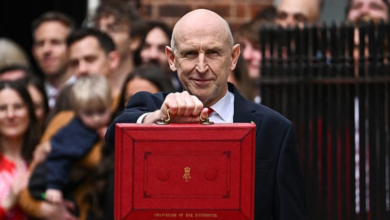
Mr. Burnham, who is set to travel to the Caribbean for the Commonwealth Heads of Government Meeting (CHOGM), told The Guardian that he seeks a “structured dialogue” with those affected by slavery, adding: “Listening to calls for a formal apology from the British state will be an important part of that process. I am open to it.”
He also personally expressed “regret and sorrow,” though he dismissed demands for financial reparations. However, Barbados Prime Minister Mia Mottley immediately interpreted his remarks in the context of opening the door to reparations.
Thanking Mr. Burnham, she stated that it was “the right and moral step to chart a new path and to acknowledge that taking the conversation on this difficult and emotive issue to the next stage is the correct course of action.”
Meanwhile, Philip J. Pierre, Prime Minister of Saint Lucia and current chair of the 15-nation Caribbean Community (CARICOM), remarked: “No British Prime Minister has ever gone this far before… We are ready for negotiations.”
“The Caribbean Community does not accept the position that reparations are ‘not the right answer.’ Nor do we accept the argument that responsibility is absolved simply because the British people of today did not personally participate in these crimes.”
Last night, both Downing Street and Buckingham Palace insisted that the King had not been caught off guard, and that the Palace was aware of Mr. Burnham’s “significant” comments in advance.
However, royal biographer and Mail contributor Robert Hardman described the Prime Minister’s intervention as a major misstep.
“Far from putting the matter to rest as the Prime Minister claims it will likely have the opposite effect. Proponents of reparations have already stated that any apology serves as a first step toward legal and, subsequently, financial redress. It could also make the failure regarding the Chagos Islands seem minor by comparison.”
“This also places the King in an exceptionally awkward position, as he serves as monarch both to the United Kingdom and to several of the nations currently demanding compensation.” He has consistently and dutifully upheld the government’s “no apology” stance.
“Now, the Prime Minister has executed a U-turn right in the middle of the royal tour, shattering months of careful planning and overshadowing the King’s future-focused engagements with toxic debates about the past.”
Charles’s tour, designed to strengthen trade and diplomatic ties in the Caribbean, had been considered largely successful until now.
He was already bracing for a storm at the biennial CHOGM summit in Antigua, where campaigners had warned him: “Do not come empty-handed.”
Last week, he visited Guyana and the Bahamas, where a reparations committee urged him to issue a formal apology regarding the Crown’s “indisputable” links to slavery.
Dr. Niambi Hall-Campbell-Dean, chair of the committee, stated: “It is unacceptable for King Charles to visit our island and yet be unwilling to apologize for the atrocities of the past.”
In a briefing prior to the tour, Foreign Office officials confirmed that the government had “not advised His Majesty to offer an apology or pay reparations” a position consistent with official policy. As a constitutional monarch, Charles is bound to act on the advice of his government.
Consequently, throughout his eight-day tour, the King was compelled to ignore demands from local campaigners to address the issue; instead, in a speech in Nassau, he acknowledged “shameful aspects of the past” and spoke of “immense suffering and injustice.” He also paid a poignant visit to a site in Georgetown, Guyana, where enslaved people who had rebelled during the British colonial era were executed.
The issue of reparative justice for former colonies affected by slavery has remained a festering sore for decades.
The British government has remained firmly opposed to paying any financial compensation, preferring instead to focus on ‘cooperation’ in areas such as education and economic development.
However, campaigners insist that Britain will ultimately have to pay. They have been emboldened by a landmark United Nations General Assembly resolution, passed in March, which classified the transatlantic trafficking of enslaved Africans as a ‘grave crime against humanity.’
Last night, royal sources maintained that the Palace had been informed of Mr. Burnham’s remarks ‘in good time,’ and emphasized that no changes would be required to the King’s speech or schedule for the Commonwealth Heads of Government Meeting (CHOGM).
A source from No. 10 Downing Street also stated that the Palace was aware of Mr. Burnham’s comments through ‘routine discussions’ with the government.He confirmed that they had been informed “in a timely manner,” adding: “It would be incorrect to suggest otherwise.”
A Buckingham Palace spokesperson stated: “During this visit, the King will not shy away from confronting the most shameful aspects of the past.
“You can, therefore, expect him to address these matters in his speech with unflinching honesty and sincere regret while remaining mindful of the broader discussions taking place between the relevant governments, both at CHOGM and beyond.
“He will be speaking at CHOGM in his capacity as Head of the Commonwealth; it would not be appropriate for him to comment on specific policy matters concerning the position of the British government.”
A source added that the King is well-accustomed to navigating a delicate diplomatic tightrope and is not deterred by visits involving challenging issues; he views his role as “batting for” the UK and the Commonwealth, while remaining “above” politics.
Ms. Badenoch remarked: “Slavery was an evil in which people from every continent and every region participated.
“There is no reason why today’s British taxpayers should be held financially liable for events that occurred many generations before any of us were born.
“Furthermore, I have even less patience for the political elites in certain Commonwealth nations who fail to deliver prosperity for their own citizens yet constantly seek new opportunities to cast blame upon the UK.
“If every Commonwealth summit is to become merely an exercise in presenting financial demands to the UK, then we must question whether such an engagement is even worth the effort.”