
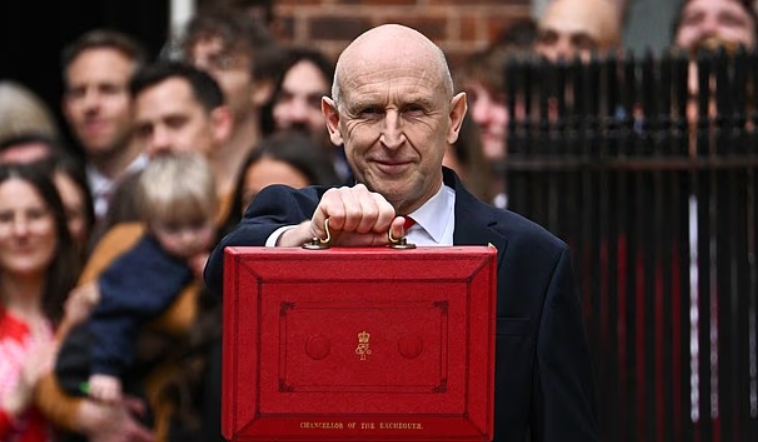
Economists predict that a “stealth” move regarding income tax will generate an additional £71 billion for the public exchequer by 2030–31.
Approximately 7 million more people will be brought into the income tax net compared to a scenario where the tax-free thresholds had continued to rise in line with inflation a practice that ceased when the thresholds were frozen five years ago.
Furthermore, as a result of this fiscal maneuver, an additional 6 million citizens will find themselves paying tax at the higher and additional rates; this analysis was shared with the Daily Mail.
The thresholds have remained frozen since 2021–22, and Chancellor Rachel Reeves announced last year that this freeze would continue until 2030–31.
This means that as wages rise, more people will be required to pay a greater amount of tax on their income.
Despite earlier indications noted by figures such as Andy Burnham that this policy might be reviewed, Chancellor John Healey took no action regarding it in his budget on Wednesday.
An analysis by the Institute for Fiscal Studies (IFS), based on data from the Office for Budget Responsibility (OBR), indicates that this measure will yield an additional £71 billion in revenue.
The IFS stated yesterday: “Compared to a scenario where thresholds had been increased in line with inflation since 2021–22, the OBR forecasts that the freeze on thresholds through 2030–31 will result in 6.75 million more people becoming income taxpayers, 6.03 million more citizens moving into the higher and additional tax brackets, and an additional £71 billion in tax revenue being collected.” On Friday, Labour was accused of ‘sneaking in tax hikes.’ Tory Treasury spokesperson Garth Davies stated: “Labour is extracting more and more tax from more and more people, even as families struggle with rising costs of living and staggering increases in energy bills.”
“Instead of reducing the ballooning welfare bill which funds the lifestyles of those who choose not to work the government is choosing to squeeze hard-working people.”
“Labour’s talk of a ‘breathing space’ is nothing but a deception; in reality, they are quietly raising levies and pushing the tax burden to record levels.”
Mr. Davies added: “The Conservatives are the only party that will cut welfare spending and reduce taxes, championing hard work and aspiration, and allowing people to keep more of what they earn.”
Treasury sources insisted that they are raising revenue in a “targeted manner,” rather than by imposing broad-based tax hikes on people’s incomes.
Freezing tax thresholds creates ‘fiscal drag’ a phenomenon where, as wages rise, individuals are pulled into higher tax brackets.
Until 2021, income tax thresholds were typically adjusted annually in line with inflation. When the then-Chancellor, Rishi Sunak, presented the budget that year, he announced that these thresholds would be frozen from April 2022 through 2026. Since then, subsequent governments have extended this freeze; and although Mr. Healey did not mention it in his budget, documents indicate that it will remain in place until 2031.
Every individual is entitled to a personal allowance of £12,570, meaning income up to this amount is tax-free. For income between £12,571 and £50,270 if derived from wages a basic tax rate of 20 percent is applied.
A higher rate of 40 percent applies to income between £50,271 and £125,140, while an additional rate of 45 percent is charged on income exceeding £125,140.
There are additional charges on income derived from savings and property.
The OBR stated that had the personal allowance been adjusted for inflation between 2021 and 2030–31, it would be £4,900 higher, while the threshold for the higher tax rate would be £20,100 higher.
It further noted that this freeze means the proportion of taxpayers subject to the higher or additional tax rates will rise from 15 percent in 2021–22 to 24 percent by 2030–31.
The freezing of tax thresholds disproportionately affects low- and middle-income earners; for a basic-rate taxpayer, the impact is equivalent to a 4 percent increase in their tax burden. Analysis by AJ Bell shows that, by next year, basic-rate taxpayers will have paid £700 more in tax than they would have if the thresholds had risen in line with inflation. By the time this freeze ends in 2031, that figure will have risen to approximately £960.
The situation is even worse for higher-rate taxpayers, who, by next year, will have paid up to £3,500 more in tax.


One Comment